Understanding Secularism in Quebec: A Balanced Perspective
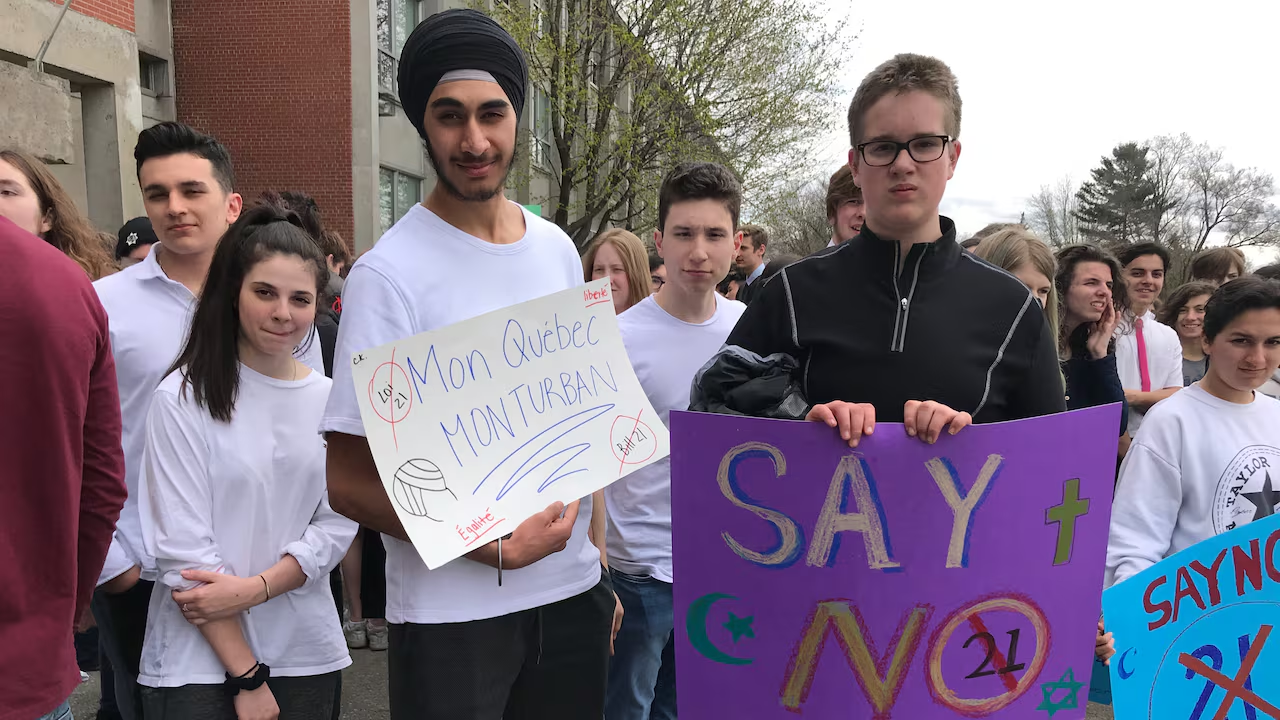
Secularism in Quebec: Understanding the Context
What does secularism mean in Quebec, and why is it often part of public discussion?
Secularism, or laïcité, refers broadly to the separation of religion and the state. In Quebec, this concept has a unique historical and social context shaped by the province’s past, its institutions, and its evolving identity.
Over time, secularism has come to represent not only a legal or political principle, but also a broader conversation about values, identity, and the role of religion in public life.
How Secularism Is Interpreted
While secularism is often associated with neutrality, its interpretation can vary.
For some, it represents:
- The protection of state neutrality
- Equality of all citizens regardless of belief
- A framework that ensures religion remains a private matter
For others, it raises questions about:
- Individual expression
- Religious visibility in public spaces
- The balance between neutrality and inclusion
These different perspectives reflect the complexity of the concept and why it continues to be widely discussed.
Secularism and Public Life
In Quebec, discussions around secularism often intersect with public institutions, such as schools and government services.
This includes questions like:
- What does neutrality look like in practice?
- How should public institutions reflect diversity?
- Where is the line between personal expression and institutional responsibility?
These questions do not always have simple answers, which is why they remain part of ongoing dialogue.
Understanding the Broader Impact
Policies and public discussions related to secularism can influence how individuals experience public life.
This may include:
- How people express their identity
- How they feel perceived or included
- How they navigate professional or public spaces
For some, these dynamics can create a sense of clarity around shared values. For others, they may raise concerns about inclusion and representation.
Understanding these different experiences is essential to having a more complete conversation.
Why This Conversation Matters
Secularism is not only a legal or political topic. It is also a social one.
In a diverse society like Quebec:
- People bring different perspectives
- Experiences vary across communities
- Interpretations of shared values may differ
This makes it important to approach the topic with nuance, recognizing that multiple viewpoints can coexist.
The Role of Dialogue in a Diverse Society
When discussions become complex, dialogue becomes even more important.
Creating space for respectful conversation allows people to:
- Share perspectives
- Ask questions
- Better understand differing viewpoints
Dialogue does not mean agreement. It means engaging thoughtfully and constructively.
Moving Beyond Simplified Narratives
Public discussions can sometimes reduce complex issues into simplified narratives.
However, topics like secularism require:
- Context
- Historical understanding
- Awareness of different lived experiences
Taking the time to move beyond simplified views allows for more meaningful engagement.
The Importance of Balance and Understanding
Navigating secularism in a diverse society requires balance.
This includes:
- Respecting shared principles
- Recognizing individual experiences
- Creating space for multiple perspectives
Finding this balance is not always straightforward, but it is essential in fostering a society where people can coexist with mutual respect.
Reflecting on Our Collective Role
Conversations about secularism are ultimately about how we live together.
They invite reflection on:
- How we engage with differences
- How we respond to complex issues
- How we contribute to a shared social environment
By approaching these discussions with openness and a willingness to understand, it becomes possible to move toward a more inclusive and thoughtful society.
Our Community of Partners







Stories and Perspectives from Our Community
Discover in‑depth features and creative pieces that highlight diversity, foster understanding and share meaningful insights across communities.

Learn and Discover
Find answers to common questions about our events, how to support us, and the broader context of Muslims in Quebec.
Raising awareness about Islamophobia helps recognize and combat prejudice and discrimination against people of Muslim faith. By encouraging dialogue and understanding, MAW contributes to a more just and inclusive society where everyone can live and practice their faith safely.
MAW activities are open to everyone—youth and adults, people of any faith or none at all, newcomers and long‑time residents. The spirit of the week is inclusive, and anyone curious about Muslim diversity in Quebec is welcome.
Muslim Awareness Week (MAW) is an annual week of solidarity and exchange where people of all ages, backgrounds and beliefs are invited to learn more about the achievements, contributions, aspirations and concerns of Quebecers of Muslim faith. It’s an opportunity to build bridges and celebrate the richness of Quebec’s diversity.
No, MAW is not a religious event. It is a cultural and civic week that promotes mutual understanding and connection among Quebecers of all backgrounds. Activities focus on culture, volunteering, education and civic engagement rather than worship.
The main goal of MAW is to bring Quebecers of all backgrounds closer together. The week encourages mutual understanding and combats prejudice through dialogue, cultural activities and awareness initiatives.
A living library is an activity where people become ‘books’ to share their stories with visitors. During MAW, Quebecers of Muslim faith discuss their experiences and answer questions to foster understanding and dismantle stereotypes.
MAW includes vigils and commemorative talks in memory of the victims of the Quebec City mosque attack. These moments of reflection and dialogue highlight the importance of fighting hatred and promoting inclusion.
The blood drive is a solidarity initiative that shows the commitment of Muslim communities to the wellbeing of all. Organized in partnership with Héma Québec, this activity saves lives and raises awareness about the importance of donating blood.
The program includes fairs and exhibitions, interfaith round tables, living libraries, conferences, film screenings, art exhibitions, blood drives and commemorative events. These events aim to stimulate dialogue and showcase the talent and initiatives of Muslim communities.
In addition to attending activities, you can support MAW by volunteering, sharing information with others, establishing partnerships or making a donation if fundraising campaigns are active. The team welcomes ideas and collaborations; feel free to reach out through the site.
You can offer your help by contacting the organizing team through the contact form on the site. Share your availability and areas of interest, and the team will let you know about specific needs. Volunteers are essential for greeting guests, supporting events and promoting the week.